
THE VANISHING(1980’s)
Considering the explosion of Jewish ballplayers that immediately preceded this era, one would have thought that Jewish baseball players would continue to increase in number. Sadly, the opposite occurred.
The reasons for this decline are not clear, though increasing Jewish assimilation into American society, resulting in better education and job prospects, not to mention more opportunity to participate in supposedly 'upscale' sports such as golf & tennis, as well as increasing competition from other minority groups, all likely contributed to the decline.
The 1980's featured very few Jewish ballplayers, and only one of note. The Baltimore Orioles pitcher Steve Stone will forever be remembered as the 1980 Cy Young Award winner.
The era also witnessed the latest in a line of Jewish Major League umpires, which had begun with Albert 'Dolly' Stark in the 1920's. Al Clark, a New Jersey boy with a sportswriter dad, umpired many historically significant baseball games during a quarter-century career. In addition, Skip Bertman began a coaching career at LSU which culminated in multiple College World Series’ championships,
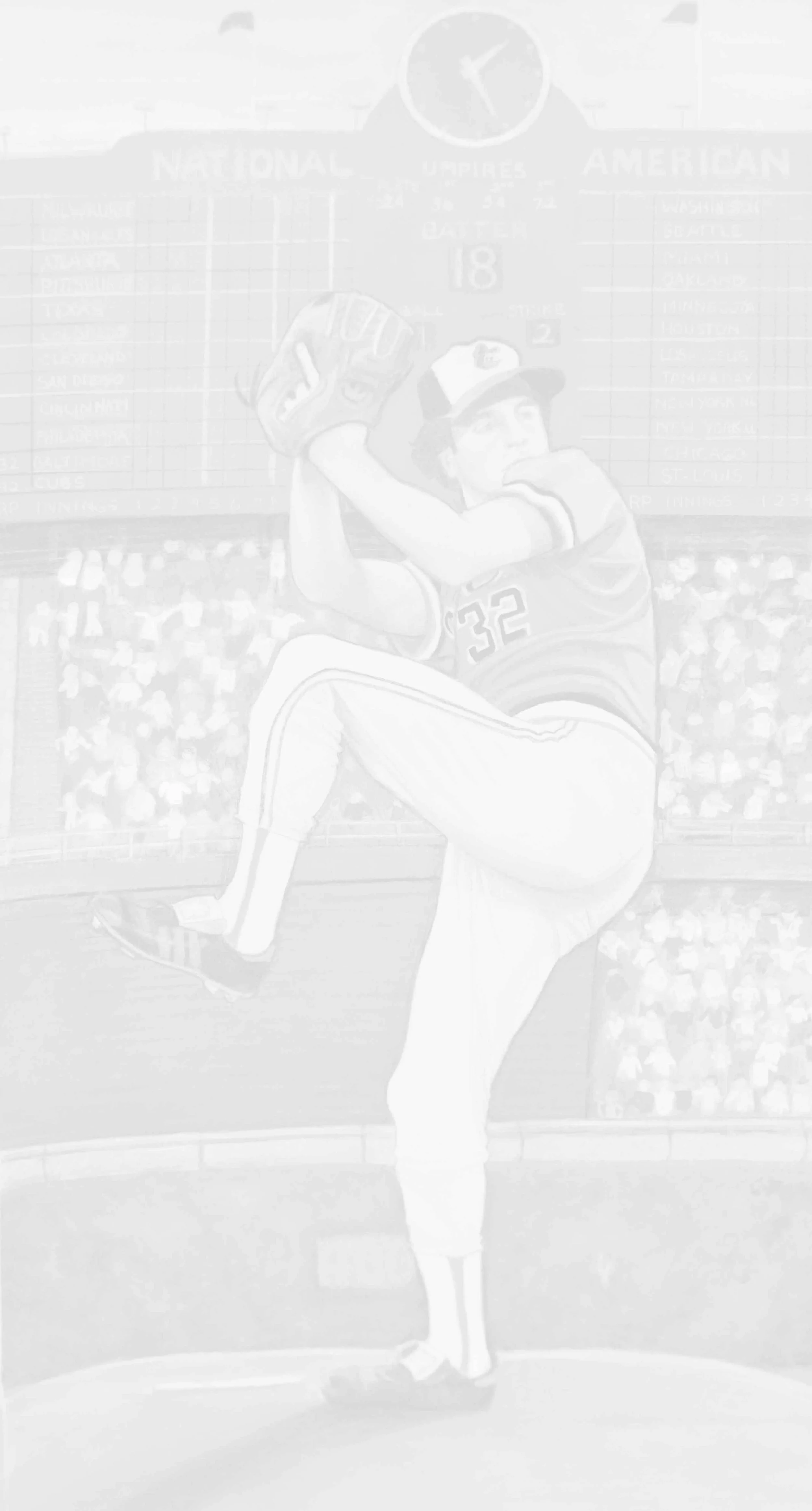
A MAN OF TWO CITIES
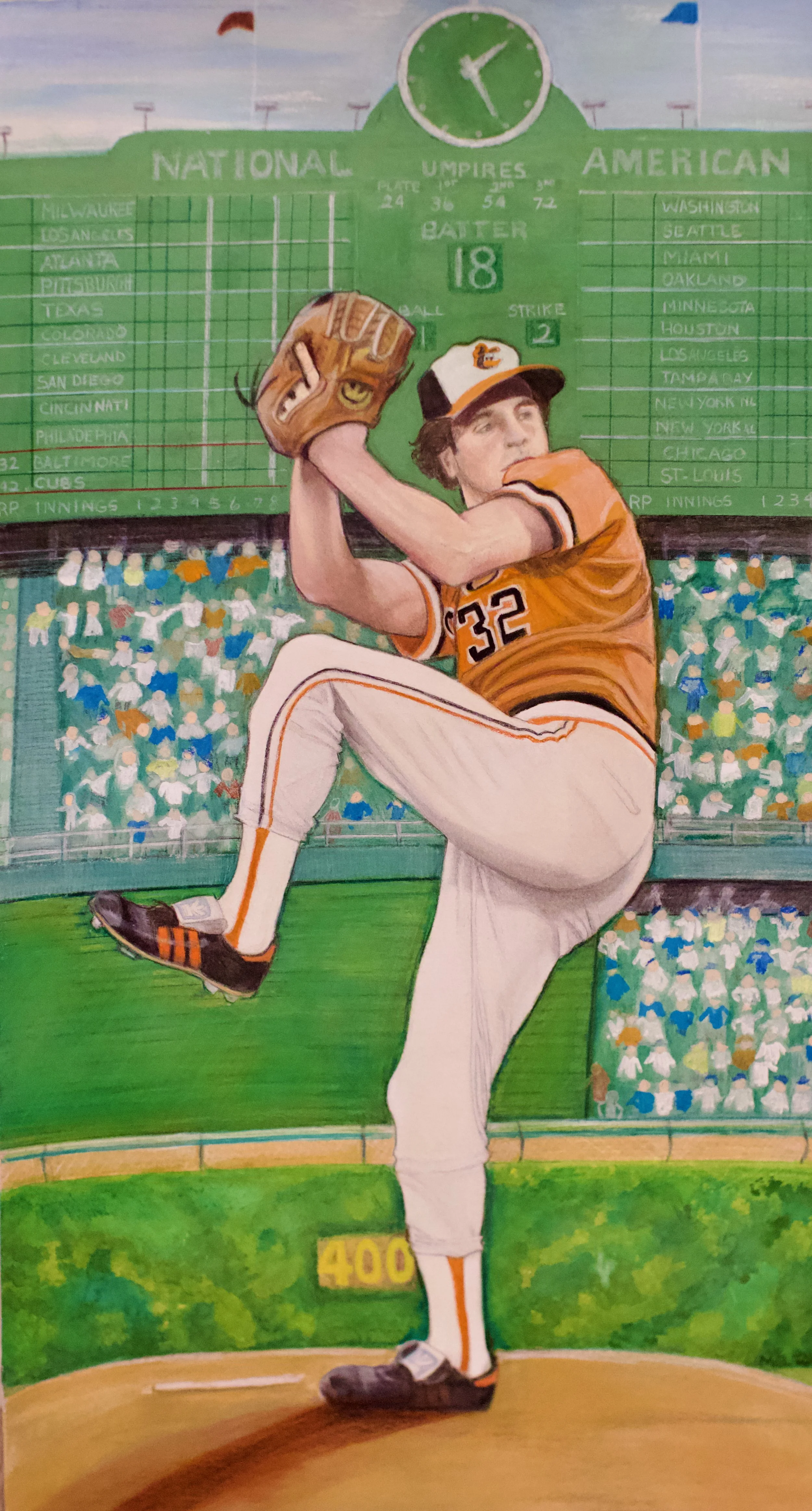
STEVE STONE (1947 - )
GOUCHE, GRAPHITE & WATERCOLOR ON ARCHIVAL PAPER, 13x25
MARGARET LAWRENCE (2024)
A RH pitcher from Cleveland, Steve's one year of glory earned him the 1980 Cy Young award, the only Jewish winner of that award besides Sandy Koufax. He later provided color commentary in WGN's Chicago Cubs broadcast booth, partnering with legendary announcer Harry Carey. Steve was a baseball maverick and a 'thinking man's pitcher' who, when he suffered an arm injury as a Chicago Cub, became the first Major Leaguer to ever refuse his team's traditional medical treatment and instead turn to holistic alternatives. When Stoney had a pitching slump in 1979, he followed his beliefs in metaphysics and positive thinking by drinking a potion concocted by a Jewish psychic/witch, switching his uniform number to '32', i.e., that of his childhood hero, Koufax, and by reading , five times, Sandy's autobiography. While captain of the Kent State U. baseball team, Steve's catcher (and billiards partner) was the future Yankees immortal Thurman Munson. Among his many hobbies, Steve also was a ping pong champion who won the Cleveland championship at age 13, wrote poetry, studied chess, and became a wine expert. In addition to his post-retirement broadcasting career, Steve became a restauranteur nicknamed The Galloping Gourmet, and posed nude for Playgirl magazine.
THE COLLEGE GOAT
SKIP BERTMAN (1938 - )
LITHOGRAPH (ARTIST PROOF) FOR NATIONAL COLLEGE BASEBALL Hall of fame, 11x15
ROBERT HURST (2006)
Skip is the legendary LSU Tigers baseball coach who won 5 College World Series championships and 7 SEC championships in the 1990’s. Over his 18-year college coaching career, Skip achieved the highest winning percentage among baseball head coaches in NCAA history. Skip was voted the second Greatest College Coach of the 20th Century. At the 1982 College World Series, while assistant head coach at the U. of Miami, he orchestrated one of the most famous pickoff plays (nicknamed The Grand Illusion) in college baseball history. As LSU Athletic Director, Skip oversaw multiple national championships in football and outdoor track, as well as several basketball Final Four appearances.
THE DRAFT
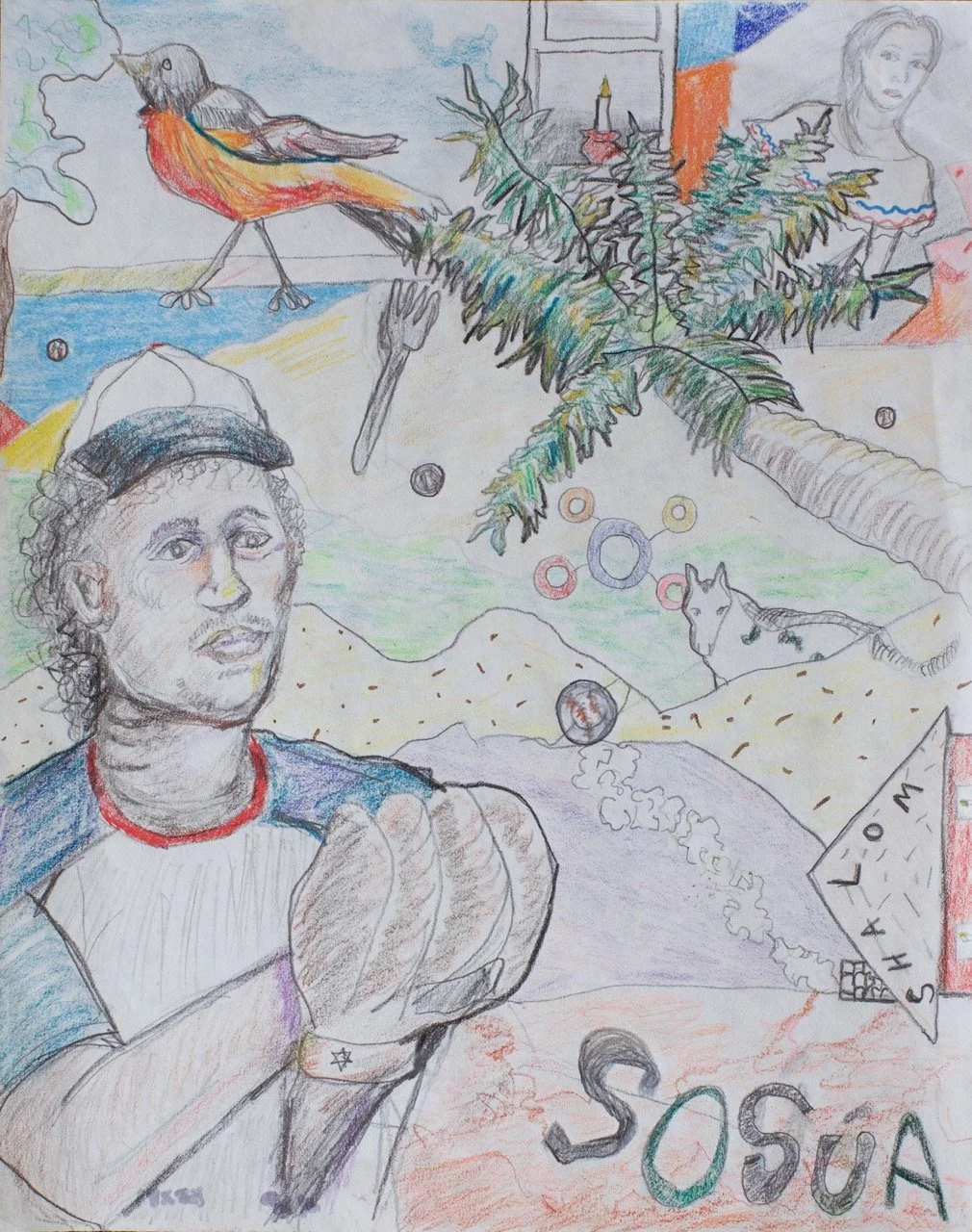
ONE IN A HUNDRED
JOSE BAUTISTA (1964- )
titled love survives, oil ON MASONITE, 18x24
(and the draft, 11×14)
GRANT SMITH (2024)
Jose was a long-time RH relief pitcher for several teams, who was drafted at age 16 out of the Dominican Republic by the NY Mets; between playing ball and coaching, he spent 40 years in professional baseball. The son of a Russian-Jewish mother and a Dominican father, Jose was a religiously observant Jew whose dark skin originally caused his fellow ballplayers to doubt his claim to be Jewish until they saw that he always wore the Star of David. Jose was a noted forkballer who first learned pitching control by repeatedly throwing baseballs through used tires arranged like home plate in his Dominican backyard. Jose's birth family had 16 children (9 being stepsiblings). When Jose started dating his future wife Lea, she said: "You're kidding me, you're Jewish, too?" In 1994, he was the only Jew in the Majors. Later in life, Jose would call his own family on Friday nights while on road trips in order to recite Shabbat prayers together. His dream is to build a synagogue in his native country.
THE FRYING PAN MAN
FREDDY 'SEZ' SCHUMAN (1925-2010)
ACRYLIC ON CANVAS, 20x30
WILLIAM LOPA (2024)
Freddy was the Bronx-born unofficial #1 fan of the NY Yankees for over 20 years. From 1988 until his death, Freddie appeared at nearly every home game carrying throughout Yankee Stadium a frying pan mounted on a wooden stick, adorned with a shamrock, which he had fans bang with a spoon in order to bring good luck to the Yankees. Also attached to the stick was a different colorful sign which Freddy created for each Yankees home game. Since he was considered their good luck charm, Freddy was flown to Arizona by the Yankees for Game 7 of the 2001 World Series but, unfortunately, his and their luck ended there. Distinctive in appearance, Freddy lost an eye playing stickball at age nine, and also lost most of his teeth from owning a candy store.
AN UMP WITH ISSUES
AL CLARK (1948-)
BIO-ILLUSTRATION drawing (and A COPY with digitally added text), for SPORTS COLLECTORS DIGEST, 7x11 (each image)
RONNIE JOYNER (2012)
Al became the first AL umpire not to wear an outside ‘balloon’ chest protector. Originally, he was a sportswriter in New Jersey, following in his father's footsteps. Al grew up wanting to be a rabbi and had his Bar Mitzvah in an Orthodox synagogue. He also is a talented amateur magician. (See cartoon text itself for additional info.)
THE ROCKIN' COLLECTOR
GEDDY LEE (1953- )
WATERCOLOR, DYE & MARKER CARTOON ON ILLUSTRATION BOARD, 16x20
DREW LITTON (2026)
Geddy is a rabid Toronto Blue Jays fan, known world-wide for his day job as the Canadian multi-instrumentalist frontman of the hard rock band RUSH. (Geddy and his RUSH bandmates are also renowned for their social activism and philanthropic support of humanitarian causes.) The deep connection between Geddy and the Blue Jays was evidenced in 2020 when Geddy could not regularly be in his usual seat behind home plate at the Rogers Center in Toronto because the Blue Jays were forced to temporarily relocate to the United States during the Pandemic. (The Canadian government had refused to give them permission to play at their home park.) As a public acknowledgement of how much they missed Geddy, the Blue Jays placed a cardboard cutoff of him behind home plate at their interim ballpark. In addition to being a famous musician, Geddy also is a renowned collector of baseball and other items. Among his baseball memorabilia, Geddy assembled an iconic group of autographed baseballs which have become the basis for a book titled 72 Stories in which he tells the tales behind some of those baseballs. The son of Holocaust survivors who met as teenagers during their imprisonment, Geddy's Mother’s experience is the basis for RUSH's song Red Sector A. Geddy considers himself Jewish to the core, but also calls himself a 'Jewish atheist, if that is possible." Geddy was born Gary Lee Weinrib, but he adopted the first name Geddy because that is how it seemed that his Mother, with her Polish-accented English, pronounced her son's name.
Collections By Era
-
BECOMING AMERICAN
(1870’s-1910’s)
-
IDENTITY CRISIS
(1920's)
-
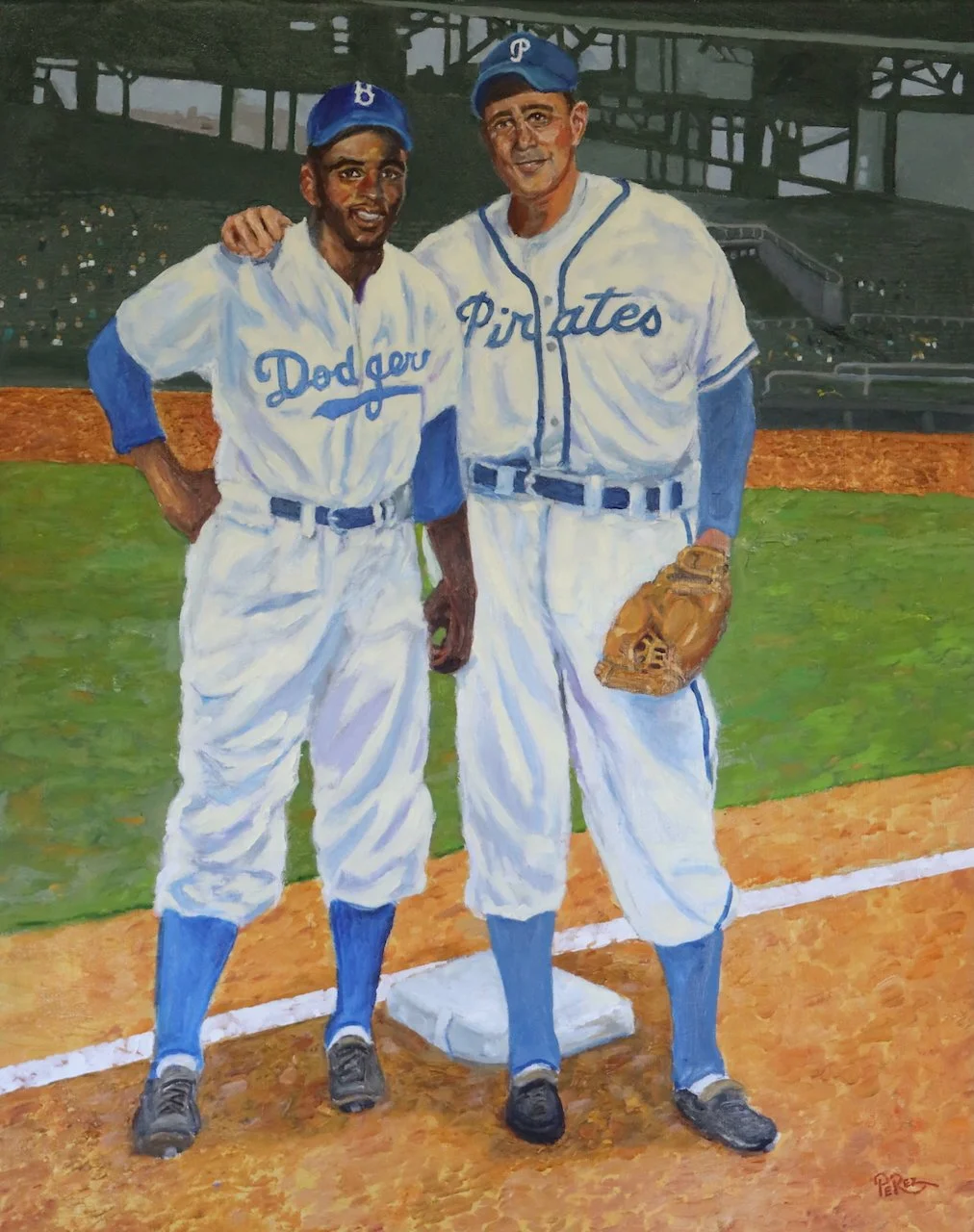
EMERGENCE
(1930’s - WORLD WAR II)
-
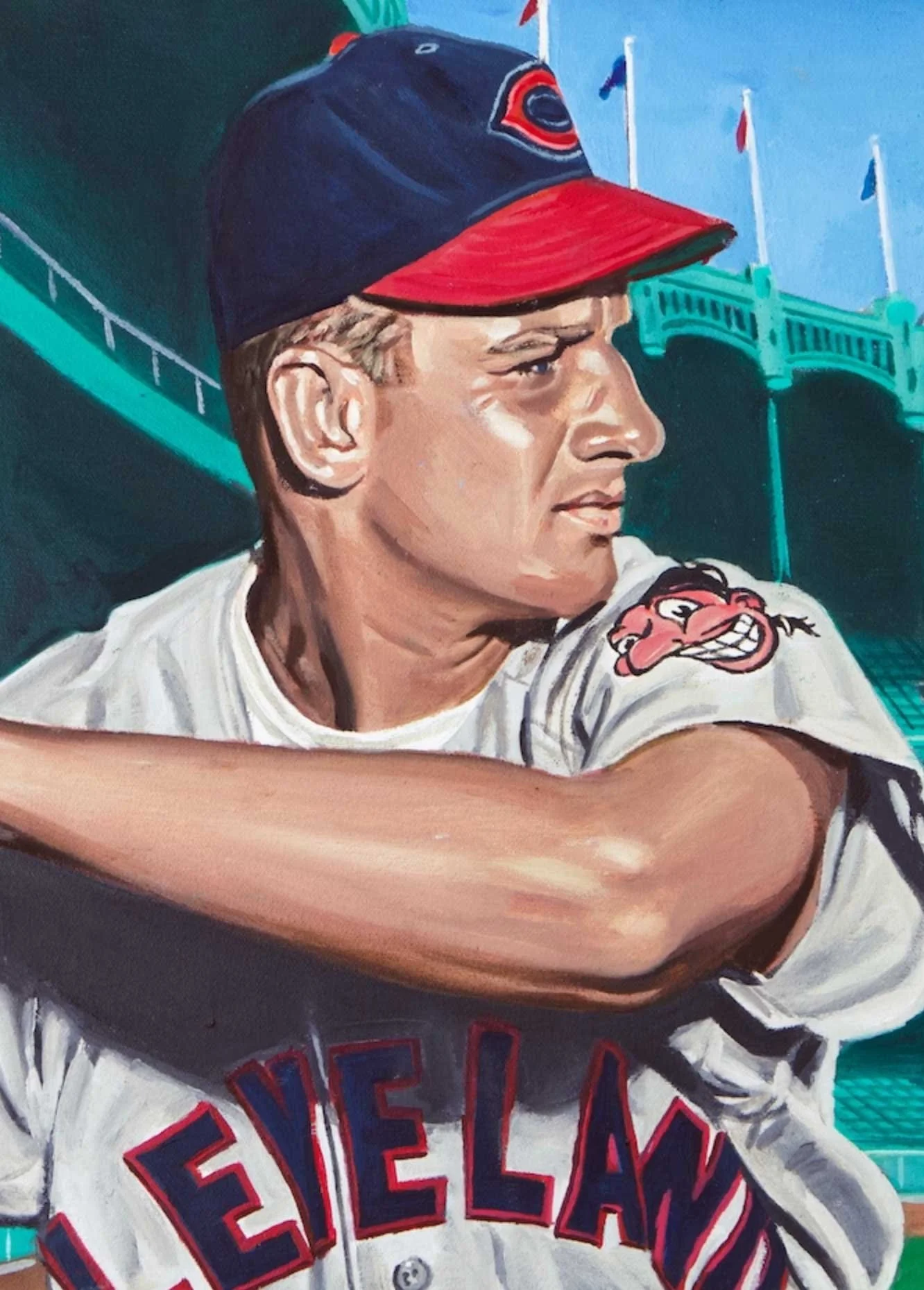
LIFE AFTER HANK
(POST WW II - 1950’s)
-
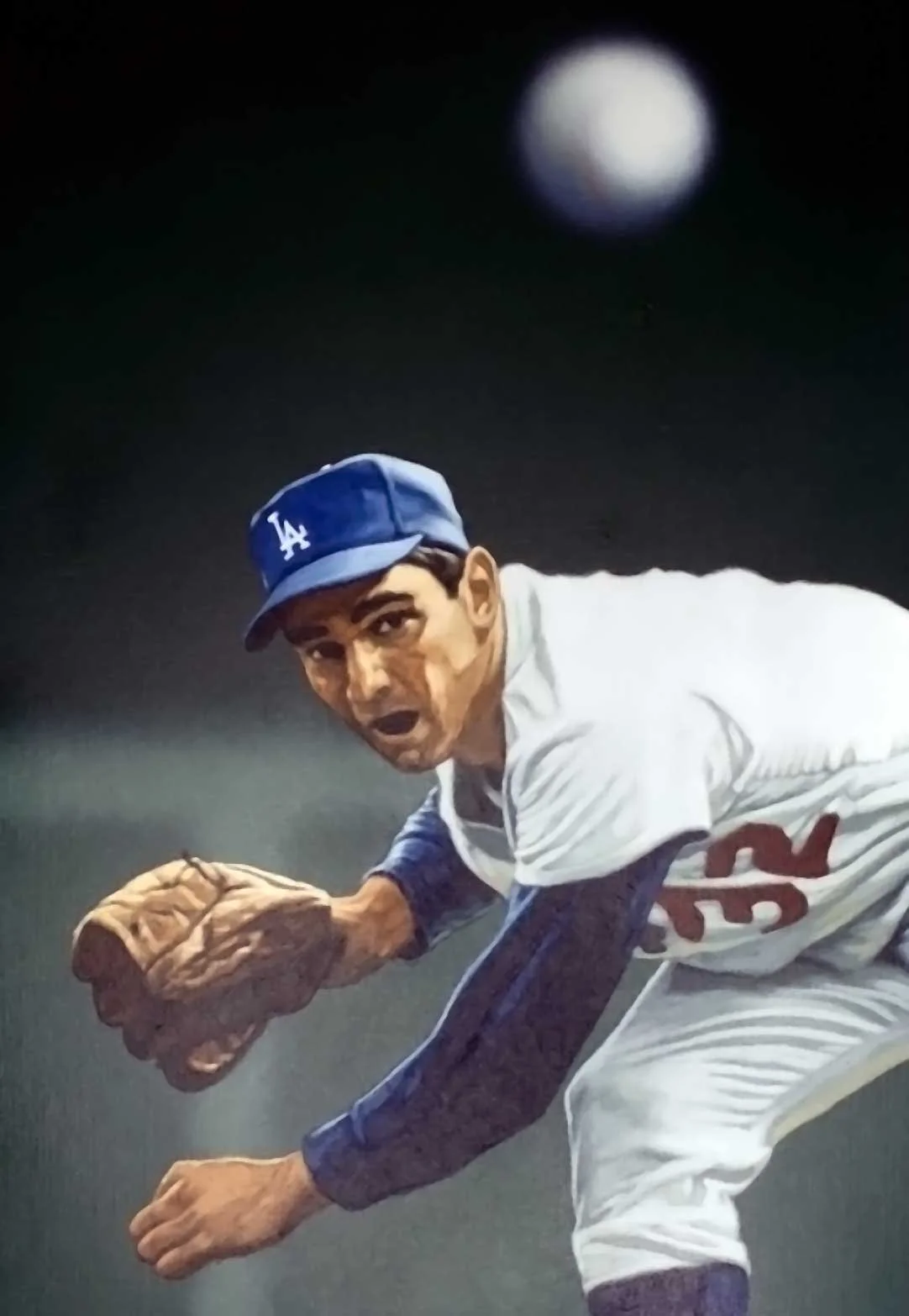
ACCEPTANCE
(1960’s-1970’s)
-
THE VANISHING
(1980's)
-
THE RETURN
(1990’s - 2000’s)
-
A BRIGHT FUTURE
(2010’s - Present)