
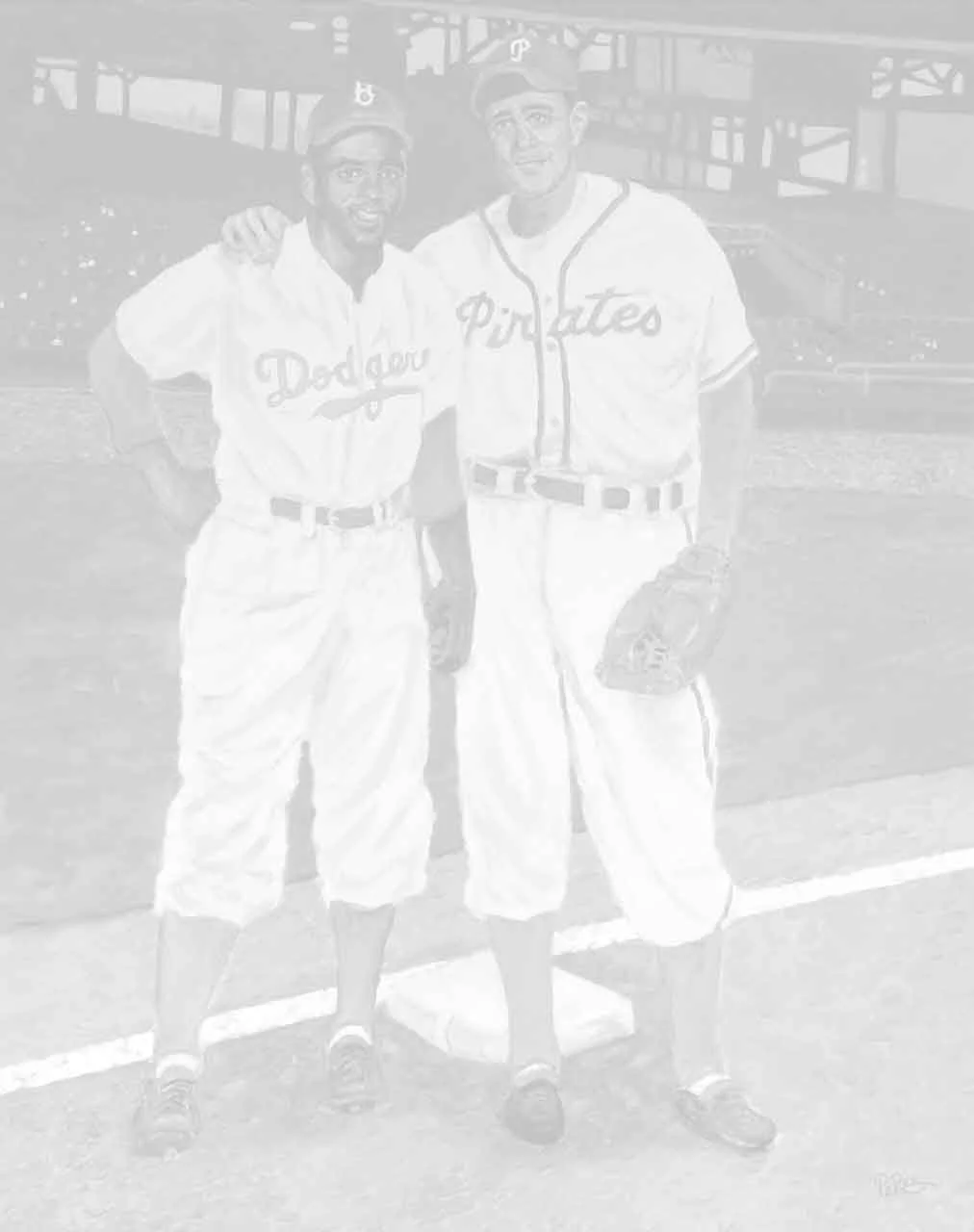
EMERGENCE (1930’s - WORLD WAR II)
Once Jews began to feel more secure as Jewish-Americans, their numbers as professional baseball players soared. This increase occurred despite the lasting effects of The Great Depression, the rise of Nazism, virulent Antisemitic attacks at home, and the rise of quota systems.
In the 1930's, there were over 30 Jewish Major Leaguers, and many of those were very good. Jews such as NY Giants catcher Harry The Horse Danning, and Boston Braves slugger Sid Gordon, both were selected to multiple All-Star teams.
In addition, due to World War 2's upheaval of Major League baseball, several female Jewish ballplayers appeared in this era. In particular, Thelma Tiby Eisen of the AAGPBL (All-American Girls Professional Baseball League), became a new type of hero for Jewish women baseball fans everywhere.
Another Jewish-related baseball story of this era was the rise of the Brooklyn Dodgers as the favorite baseball team of the approximately 1 million Jews living in Brooklyn, NY. Although no Jewish Dodger ever became a star while the team was in NY, the team had several Jewish fan favorites such as Canadian-born Goody Rosen.
But the true significance of this time period was the arrival of Hammerin' Hank Greenberg as baseball's first Jewish superstar. A Jewish Babe Ruth, Hank also was a war hero and was considered 'a credit to his religion' for not playing on the Jewish high holy day of Yom Kippur. In his later years, Hank famously remarked: "I find myself wanting to be remembered not only as a great ballplayer, but even more as a great Jewish ballplayer."
THE HEBREW HAMMER
HANK GREENBERG (1911-1986)
OIL ON CANVAS, 24X30
DICK PEREZ (2023
Hammerin' Hank Greenberg, also known as The Hebrew Hammer, was the first Jewish Hall of Famer, and one of baseball's All-Time Greats. He is most important historically because of the positive boost that Hank's ballplaying exploits and impeccable character gave to how America viewed Jews, and how American Jews viewed themselves. His many on-field accomplishments included being the first to win the MVP award at two different positions (1B and OF), setting a single season HR record for RH batters (58), and the season RBI record for RH batters (183). This two-time World Series champion not only was very big in stature, but also was a Mensch revered by Jews and others for deciding not to play on the holiest Jewish holiday, Yom Kippur, although his long-time Detroit Tiger team was in a tight pennant race and Detroit was then a hotbed of Antisemitism. Hank's other team, the Pittsburgh Pirates, moved in their left field fence, creating what became known as Greenberg's Gardens, to accommodate Hank's declining HR power at the end of his long career. A victim of vicious Jew hatred from the start of his playing days, Hank was a very smart and proud Jew, never backing down from his tormentors. A supporter of equal rights for all, Hank also had a memorable encounter with Jackie Robinson during Jackie's first year in the Majors, urging the rookie "...to fight back and to keep his head up!" Hank also was a great American Patriot who was the first in baseball to enlist after WW2 began, and then re-enlisted after Pearl Harbor, volunteering for combat duty with a B-29 bomber unit. Later, as the color blind GM and part-owner of the Cleveland Indians, Hank was instrumental in desegregating the American League by signing trailblazing Negro Leaguer Larry Doby.
MIXED MEDIA ON CANVAS MOUNTED TO GATERBOARD, 23x23
ARTHUR K. MILLER (2023)
newspaper CARTOONS
-PHIL BERUBE (7x7)
-‘Bell’ (5x9)
(1940’s)
CARTOON ON COVER OF THE SPORTING NEWS, 12X16
WILLARD MULLIN (1945)
[Not Original]
CARTOON ON COVER OF THE SPORTING NEWS, 12X16
lou darvas (1945)
[Not Original]
ADVERTISING POSTER FOR GOEBEL BEER, 18x24
UNCREDITED ARTIST (1930's)
[Not Original]
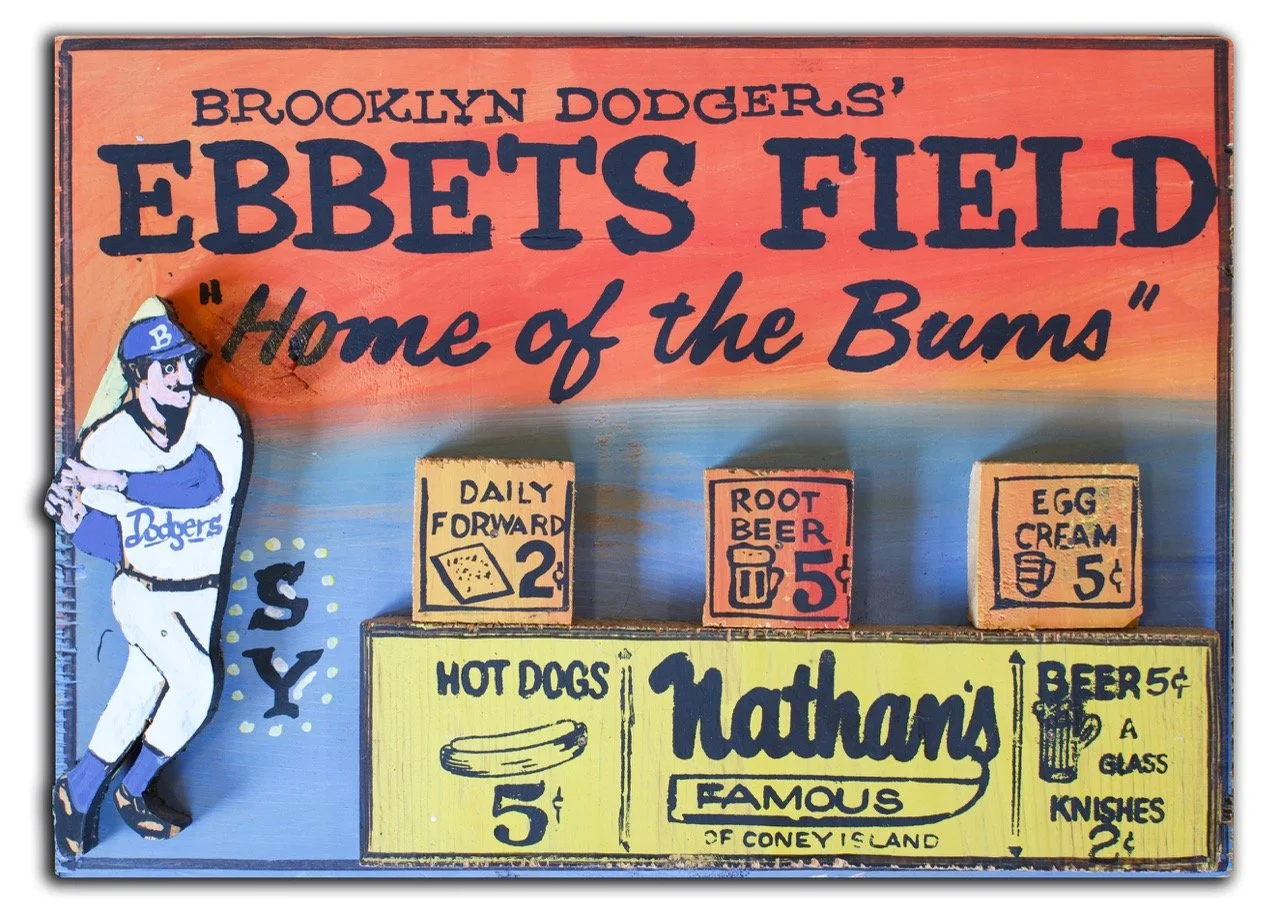
AMERICA'S RED HOTS
NATHAN'S FAMOUS (1916-)
Jewish folk artist Harry Glaubach created this wood carved folk art to celebrate Nathan's, the fast food restaurant stand that is one of the many Jewish connections to baseball. Harry was a child of the depression, so poor that he had to make his own toys from wood scraps. His hobby evolved into a decades long career as an NYC street artist. As for Nathan's, it originated in 1916 in Coney Island as the brainchild of Nathan Handwerker, a Polish Jew. He originally achieved fame and success by charging only five cents per hotdog, one half of what his competitor charged, and by labeling his hotdogs as "kosher style" so as to attract Jewish customers. He also hired actors to eat there wearing surgeon's smocks in order to reassure customers at a time when the safety of hotdog contents could be in doubt due to the lack of public food regulation. Nathan's, which later changed name to Nathan's Famous, became the first official hotdog of Major League Baseball in 2017. Over 25 million Nathan's Famous hotdogs are consumed at MLB ballparks per season. The sound of "Get your red hots!” shouted by roving hotdog vendors has been a familiar sound to ballpark fans everywhere, as hotdogs and beer are the traditional ballpark fair. Some NYC little league coaches even used to take their ballplayers to Nathan's after games, buy them two hotdogs for a win, but only one after a loss. Since the 1970s, Nathan's Famous has held a hotdog eating contest every July 4, with the world record being set there in 2021 when Joey Chestnut consumed 76 hotdogs and buns in 10 minutes. The other Jewish baseball connection in this artwork is the newspaper labelled the Daily Forward, the 20th Century's primary NYC Yiddish-language newspaper. In its efforts to assimilate Jewish American immigrants, ‘The Jewish Daily Forward’, as it was known in English, would regularly include news about baseball, America's national pastime.
PAINTED WOOD CARVING, 11×15
HARRY GLAUBACH (1993)
graphic novel PAGE, color pen & ink on bristoL, titled THE STARS OF DAVID VS. THE BETHANY bANTAMS, BETHANY HILL, PA 1932, 11x17, 3 versions: rough draft, color study, and final) (and autographed copy of the novel on which THIS ARTWORK is based)
JAMES STURM (2024)
The Golem’s Stars of David
In the face of virulent Antisemitism, particularly in the American Heartland, a number of Jewish baseball teams barnstormed across the country during this era. However, none possessed a Golem such as existed in The Golem's Mighty Swing, the graphic novel whose author created this one page comic strip based upon his novel.
ROUGH DRAFT COLOR STUDY
THE GRAPHIC NOVEL
[Not Original]
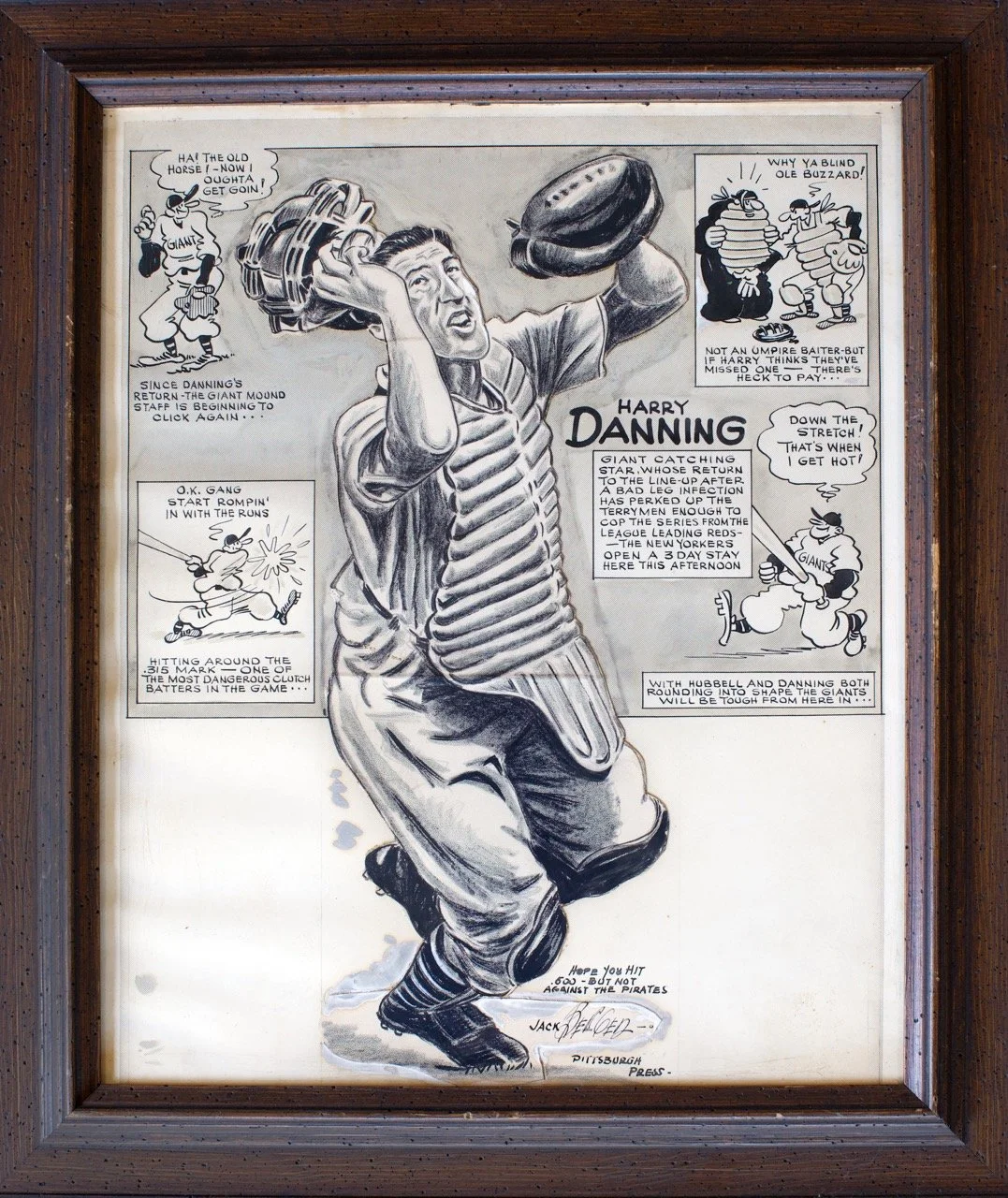
THE HORSE
HARRY DANNING (1911-2004)
Harry was a tough-as-nails NY Giants four-time All-Star catcher, originally from Los Angeles. His durability led to Harry being nicknamed Harry The Horse after a mobster character in the Broadway musical Guys & Dolls. Overcoming the derogatory nickname Schnozz given to him because of his large Semitic nose, Harry became the star Jewish baseball player whom the Giants had sought for decades in order to attract more Jewish fans to the Polo Grounds.
NEWSPAPER CARTOON FROM THE PITTSBURGH PRESS, 14×18
A present TO DANNING from THE ARTIST, JACK BERGER (1939)
aDVERTISING POSTEr FOR GRANGER PIPE TOBACCO, 14x20
UNCREDITED ARTIST (1940's)
[Not Original]
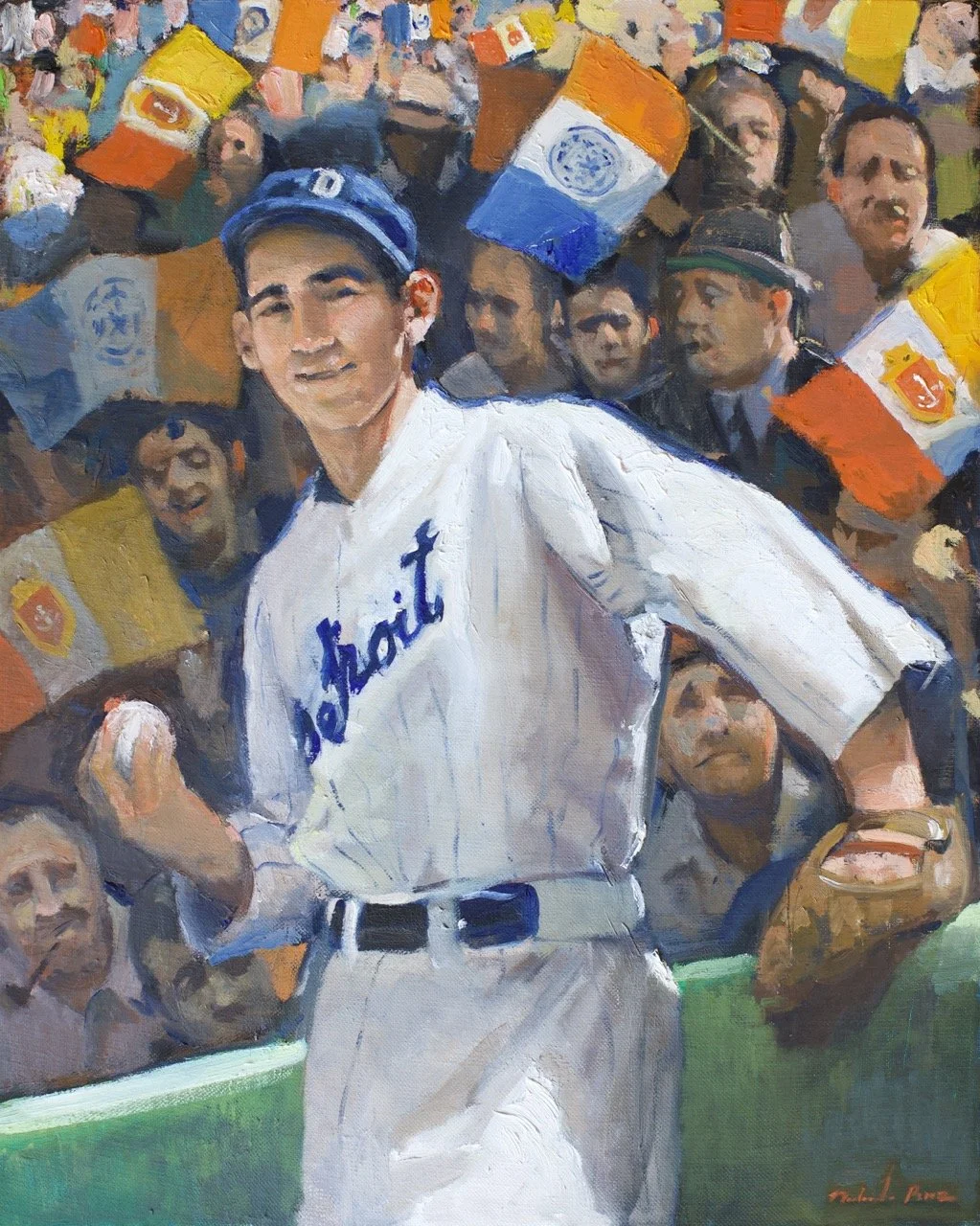
THE LAST RUSSIAN
IZZY GOLDSTEIN (1908-1993)
OIL ON CANVAS, 16x20
NORBERTO PEREZ (2026)
Isadore 'Izzy' Goldstein, a cup of coffee RH pitcher for the Detroit Tigers in 1932, was the last Major League ballplayer born in Russia. He hailed from the city of Odesa in what was then The Russian Empire. (It is now part of Ukraine.) Interestingly, only 3 Major League ballplayers were Russian natives, and all three were Jewish. (The other two were Bill Cristall and Reuben Ewing.) Izzy's family moved to the Bronx when he was a boy but, unlike most of his Jewish compatriots, he was not much of a student and dropped out of one high school to play semipro baseball. However, when his attempt at a semipro career failed, Izzy enrolled at a different high school at the urging of its coach - and then helped the team (with the assistance of teammate & neighbor Hank Greenberg) go all the way to the NYC championship game...where they lost. He then dropped out of high school for a second time and began a substantial career in the Minors. That culminated with Izzy's brief stint in the Majors with the Tigers, which itself ended ignominiously as the result of his developing a sore arm. Having retired from baseball, and because he was single and without dependents, Izzy spent two years during World War 2 in the dangerous South Pacific theatre as a combat soldier. He returned stateside to have a lengthy career selling men's wear in NYC before moving to Florida... thereby completing a life journey very typical of many Jews of that era, and reflecting the American-Jewish experience: escape from the antisemitic violence of Russia or eastern Europe, earn a living in NYC's garment trade and, finally, retire to sunny south Florida.
MR. BEST-DRESSED
PHIL WEINTRAUB (1907-1987)
COMIC BOOK STYLE DRAWING ON PAPER, 16x20
DEAN HASPIEL (2024)
Known as The Jewish Fashion Plate from Chicago, as well as The Best Dressed Man in Baseball, Phil persuaded his father - who believed that all ballplayers were Bums - to sign Phil's first pro contract by threatening to leave home. With Antisemitism being the likely culprit, Phil inexplicably was a perennial Minor Leaguer despite being a solid Major League hitter and OFer whenever he was called-up (primarily by the NY Giants). In 1934, Phil achieved the first season batting average above .400 in over 30 years in the Southern Association. In a game at the Polo Grounds against the Brooklyn Dodgers in 1944, Phil drove in 11 runs, prompting Babe Ruth, who happened to be in attendance, to proclaim: "Kid, you knocked in enough runs for a month! "
The Scribe
SHIRLEY POVICH (1909-1988)
OIL ON LINEN PANEL, 16x20
NORBERTO PEREZ (2024)
Shirley was a Washington Post columnist and reporter for over fifty years. He began his career covering Babe Ruth, and had his last column published the day after his own death. Shirley was a baseball Hall of Fame writer known for his acerbic wit and for believing that “baseball is not dull but that only the people who think so are”. Growing up in Bar Harbor, Maine far from professional baseball, the first game Shirley attended was also the first game on which he reported. At age twenty-one, he became the youngest sports editor of a major metropolitan newspaper. He consistently challenged baseball’s color line in his Post sports columns. His unusual first name once resulted in Shirley's accidental inclusion in Who's Who of American Women. Shirley was the father of famed TV personality Maury Povich, and the only baseball writer to have a baseball park as well as a stadium press box named after him.
THE WIZARD OF LIFE
(INSURANCE)
CY BLOCK (1919-2004)
INK, ACRYLIC & COLOR PENcil ON CANVAS, 16x20
NATHAN BERG (2026)
After a brief and frustrating tenure in the 1940's as an infielder for the Chicago Cubs, Cy turned himself into a multi-million dollar life insurance salesman who even purchased a billboard on Broadway overlooking Times Square to tout his expertise. Born & raised near Ebbets Field in Brooklyn, Cy failed to make his high school baseball team because the coach said that he was too small. As with all things in Cy's life, however, he believed that drive and enthusiasm would overcome, and he did, becoming a Major Leaguer despite the naysayers. Sadly though, despite his posting a lifetime .325 batting average in professional baseball, Cy never was given a fair shot to make it in the Big Leagues. As one who always spoke up for what he believed to be right, Cy later testified about the mistreatment of Minor Leaguers at a hearing before Congress concerning how the Reserve Clause had prevented him & others from getting an extended Major League trial. Unsurprisingly, Congress failed to act and The Supreme Court thereafter upheld MLB's anti-trust exemption & Reserve Clause. In addition to his insurance career post-baseball, Cy also led a syndicate whose attempt to buy the Detroit Tigers was suspiciously rejected because the Tigers' owner Walter Briggs (a known racist & likely antisemite), claimed that the offer was received after the deadline. Cy was so smitten with his beautiful wife Harriet that he entered her in the NY Miss Subway contest even though she was a married woman. (She was quickly disqualified.) Cy was known around town for driving a Rolls Royce with the license plate 'LBA 325', his lifetime batting average.
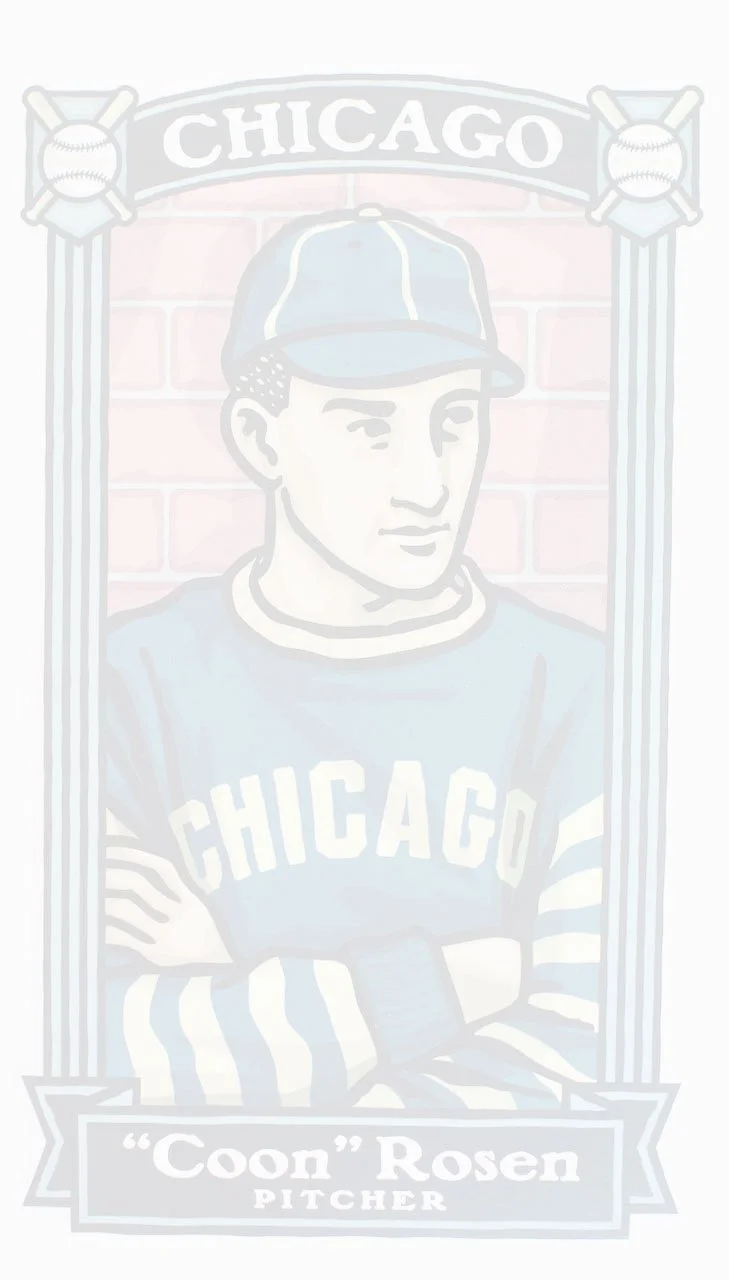
THE KING OF SOFTBALL
HARRY “COON” ROSEN (1908-1997)
SKETCHES (2) & ENLARGED VERSION OF DIGITALLY CREATED BASEBALL CARD (front & back separated) FOR THE INFINITE BASEBALL CARD SET, 6x9 (card), 8x11 (final sketch), 5x8 (initial sketch with notes)
GARY CIARADKOWSKI (2019)
After turning down a pro baseball contract with The St. Louis Cardinals in order to play softball, Harry used a figure-eight arm motion to win more than 3,000 softball games, including over 300 no-hitters and nearly 200 perfect games. At age 68 in 1976, Harry struck out over 10 Houston Astros in a celebrity softball game at the Astrodome. Harry was given the politically incorrect nickname Coon because of his curly black hair and swarthy complexion. He first gained fame by winning the softball championship of The Century of Progress International Exposition - also known as the 1933 Chicago World's Fair - pitching 8 games in three days.
MOE AS IN MOSES
MORRIE 'MOE' ARNOVICH (1910-1959)
newspaper cARTOON, 7x9
PHIL BERUBE (1934)
Morrie was an undersized, line-drive hitting All-Star outfielder from Wisconsin who played primarily for the Philadelphia Phillies. He was greatly respected for his hustle and hard work. Morrie was one of the most religious of all Jewish baseball players and kept Kosher his whole life. Arnovich was nicknamed Moe (which many Jews were derisively called in those days) as an abbreviation for Moses, Snooker because of his skill at British pocket billiards, and Son of Israel for obvious reasons. After being turned down by the Army during WW2 due to a dental problem, Morrie purchased false teeth just so that he could enlist. After baseball, Morrie returned to his Wisconsin hometown and among his other activities served as its Catholic H.S. basketball team coach.
THE PRIDE OF CANADA
GOODWIN 'GOODY' ROSEN (1912-1994)
newspaper cartooN on PAPER, 17x22
BURRIS JENKINS (1940's)
The first noteworthy Jewish baseball player from North of the Border, Goody was a cigar smoking, Yiddish-speaking, former traveling salesman for a tailoring firm, Tip Top Cleaners, who became a Canadian national hero. He is the only Jew in the Canadian Baseball HOF. Goody was so small in stature that when he first reported for duty, the clubhouse man thought Goody was there to try out for a batboy position and had no uniform small enough to fit him. Goody was one of a record-setting 5 Jews on the 1946 NY Giants' roster. As a Brooklyn Dodgers outfielder for most of his career, Goody became beloved by New Yorkers for his charitable work in the community. Goody also had an illustrious second career playing fastpitch softball, even earning a spot on the Canadian national team. Married for 59 years, Goody passed away soon after his beloved wife.
colorblind
SAM NAHEM (1915-2004)
titled uNITED FORCES - SAM NAHEM, ACRYLIC ON cotton CANVAS, 24X30
JOHN HALL (2024)
In 1944, as manager of the Overseas Invasion Service Expedition All-Stars, Sam was responsible for integrating baseball in the U.S. Military. A rare Sephardic-Jewish ballplayer, Sam's first language was Arabic because his family had immigrated from Syria. He was a mediocre RH pitcher from NY for several NL teams, but well-known for his radical left-wing politics. Called Subway Sam because of his NY background, he was a highbrow hurler who used to bring books to read in the dugout. Sam switched from catcher to pitcher early in his career because he couldn't get his glasses over his catcher's mask. Sam also became a licensed NY lawyer despite having earlier dropped out of Brooklyn College; however, he then was blacklisted from the law for having been a Communist in his youth. Sam later became a union leader at Chevron, which was near where he lived in Berkeley, CA.
HOWLIN' HILDA
HILDA CHESTER (1897-1978)
A lifetime New Yorker known as Howlin' Hilda because of her full-throated ballpark yell, Hilda was the Brooklyn Dodgers' most well-known fan and possibly the most well-known baseball fan in history. She was renowned for ringing a large bell from her CF perch at Ebbets Field, with a handmade sign close by that read Hilda is Here. Hilda used to sport a button which read Tell the World, I'm from Brooklyn, and was said to speak true ‘Brooklynese’. To liven up the ballpark, Hilda would lead Dodgers' fan through the aisles in a snake dance. She was given a lifetime pass by the Dodgers, and was the only non-player voted to the All-Time All-Star Dodgers team. She even appeared in several baseball movies and, after her death, became the subject of an off-Broadway musical. Hilda's daughter Bea played in the AAGPBL (The All-American Girls’ Professional Baseball League), and Hilda herself played in her youth for the NY Bloomer Girls. A life-size statue of Hilda resides at the Hall of Fame in Cooperstown, alongside statues of other famous fans. Hilda bagged peanuts at the ballpark as her day job.
ACRYLIC & PRISMaCOLOR PENCIL ON COLD PRESS WATERCOLOR BOARD, 16x20
CHRISTOPHER PALUSO (2024)
THE SOLID MAN
SID GORDON (1917-1975)
Sid was a Brooklyn-born, highly dependable two-time All-Star slugger with a 'Great Eye', who played both infield and outfield positions. He was so well-liked in NYC that his former team, the Brooklyn Dodgers, gave him a 'Sid Gordon Day’ at Ebbets Field even though Sid was then a NY Giant. His mother saved his baseball career at its start by insisting Sid continue rather than run the family coal business after his father suddenly died. In 1941, during his first game in the Majors, Sid was one of a record-setting 4 Jews on the field for the Giants. After being traded by the Giants, its owner sent Sid, as a sign of respect, a check for the money that Sid had been denied in contract negotiations earlier that year. When Dodgers' manager Leo Durocher famously opined Nice Guys Finish Last, he listed Gordon as one of the nice guys.
Newspaper cARTOON, 15x22
WILLARD MULLIN (1940's)
THE PATRIOT
SIMON 'SY' ROSENTHAL (1903-1969)
ACRYLIC ON CANVAS, 20x24
CORTNEY WALL (2023)
Though over military age during WW2, Sy nonetheless managed to enlist in the Navy, at age 38, after his underaged son Buddy had enlisted in the Marines at age 17. Sadly, Buddy then died in battle in the Solomon Islands, and later Sy was rendered a paraplegic when his minesweeper was sunk off the coast of France. Sy was the first Jew on the Boston Red Sox, and one of only two Red Sox in history to be both born and to die in Boston. He spent his life after baseball involved in charitable endeavors. Feted as a man of great courage, whose love of God was reflected in his Love of Neighbor, Sy's Jewish fans once presented him with a small bag of gold at Fenway Park in recognition of "…the clean character and high ideals to which all his friends attest."
ALL-AMERICAN GIRL
THELMA 'TIBY' EISEN (1922-2004)
ACRYLIC ON CANVAS, 20x24
CORTNEY WALL (2023)
An L.A. girl raised in an orthodox Jewish family, Tiby became a shipyard worker at the start of WW2 before being recruited to entertain the home front by playing in the All-American Girls' Professional Baseball League, a baseball phenomenon immortalized in Tom Hanks' movie A League of Their Own. An All-Star and a league champion, Tiby was an OFer and lead-off hitter who also was a daring runner. At age 18, Tiby played fullback in a women's semi-pro football league until the league was outlawed by the L.A. City Council. A natural athlete, Tiby belonged to 3 golf clubs, played on a field hockey team & performed Tai Chi.
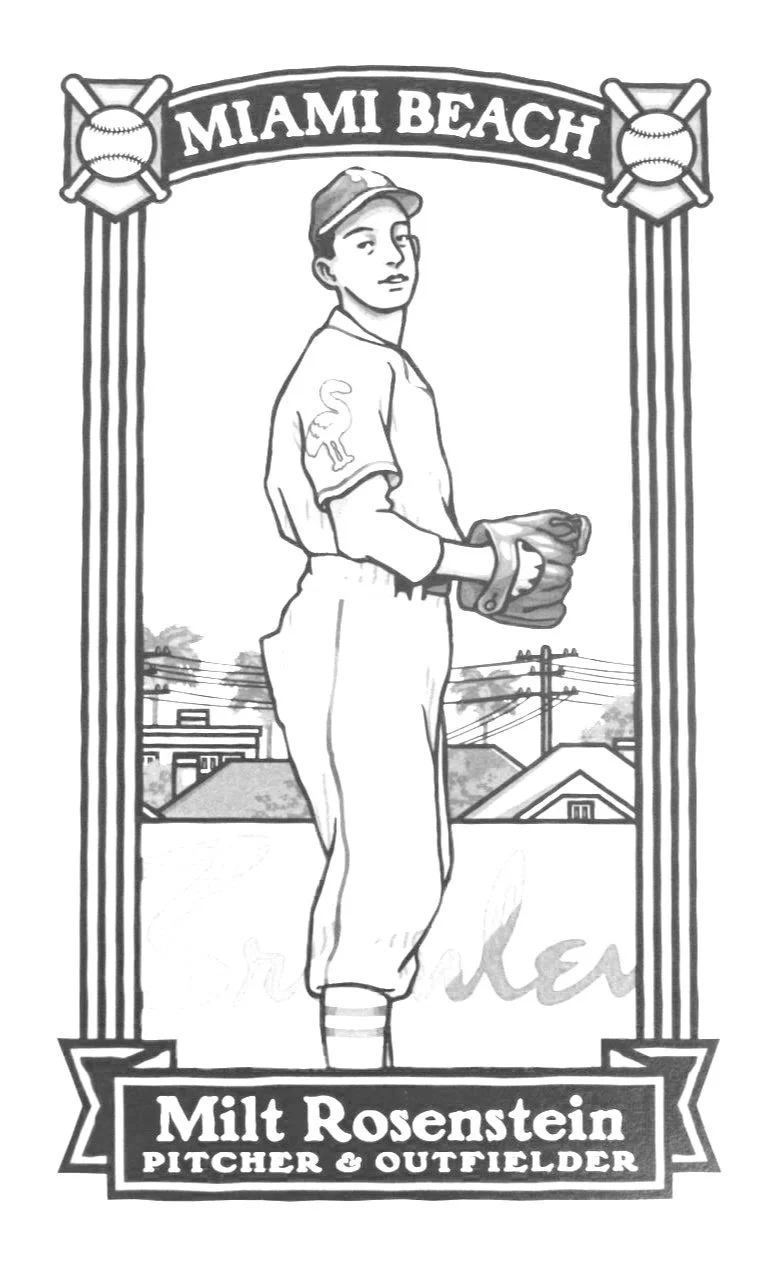
WHAT IF?
MILT ‘rosey’ ROSENSTEIN (1920-1944)
SKETCHES (2) & ENLARGED VERSION OF DIGITALLY CREATED BASEBALL CARD (front & back separated) FOR THE INFINITE BASEBALL CARD SET, 6x9 (card), 8x11 (final sketch), 5x8 (initial sketch with notes)
GARY CIARADKOWSKI (2019)
Milt was an ace LH pitcher from NY's Catskill Mountains who was drafted into the Army from the Minor Leagues. Sadly, he never played baseball again. He died in battle in the Philippines during WW2, after refusing the opportunity to be sent home due to an earlier battlefield injury which he suffered.
Collections By Era
-
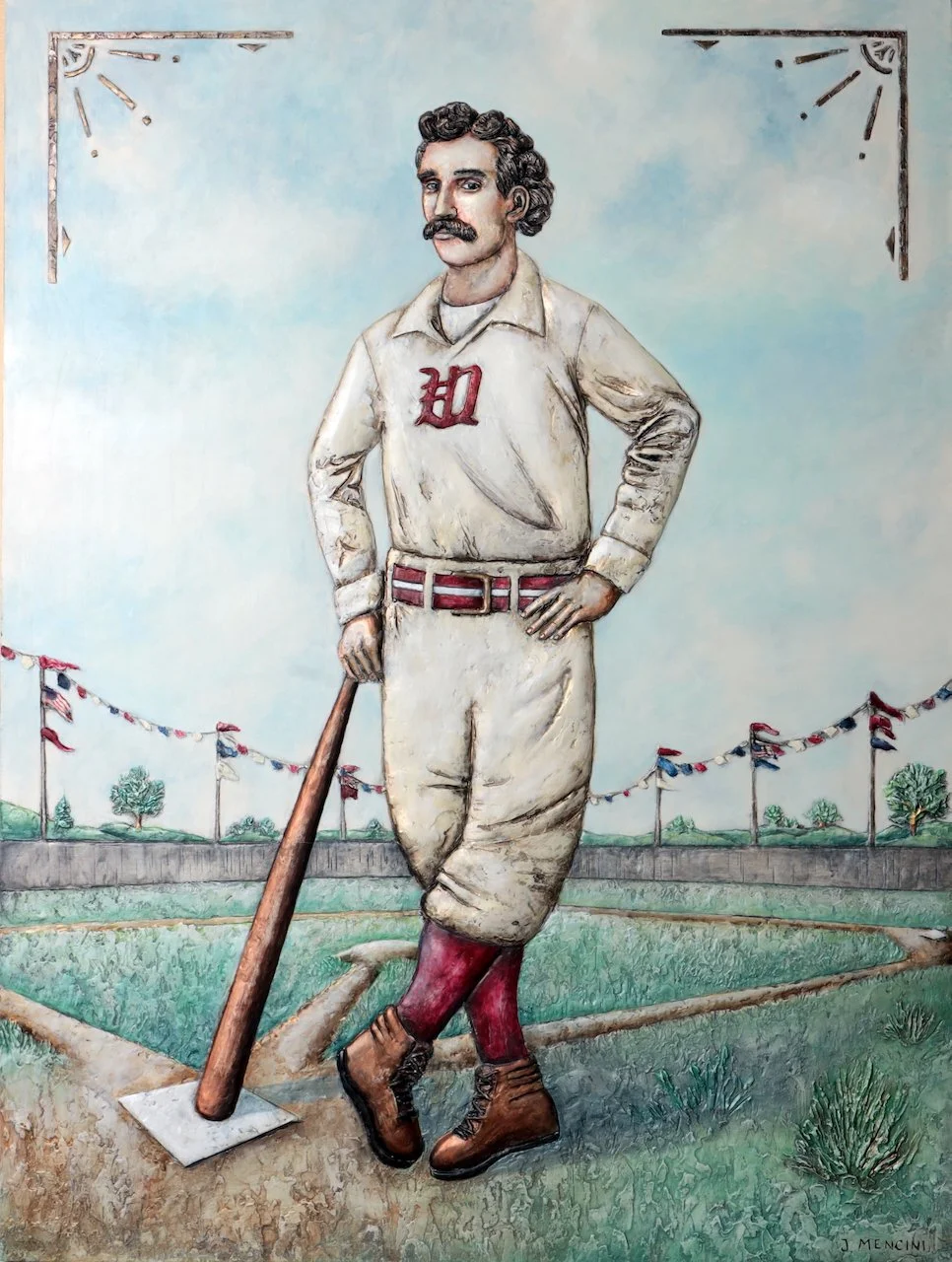
BECOMING AMERICAN
(1870’s-1910’s)
-
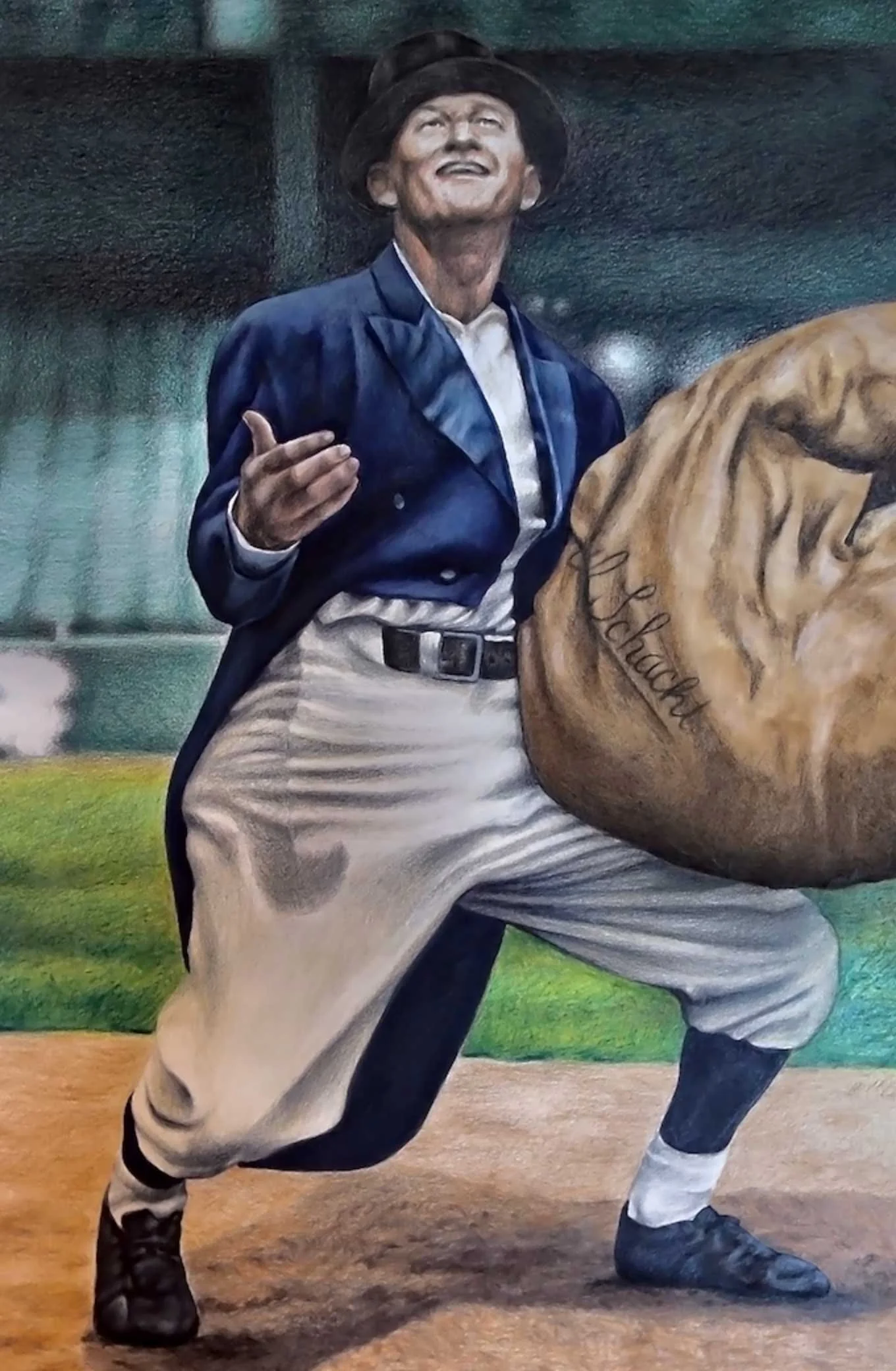
IDENTITY CRISIS
(1920's)
-
EMERGENCE
(1930’s - WORLD WAR II)
-
LIFE AFTER HANK
(POST WW II - 1950’s)
-
ACCEPTANCE
(1960’s-1970’s)
-
THE VANISHING
(1980's)
-
THE RETURN
(1990’s - 2000’s)
-
A BRIGHT FUTURE
(2010’s - Present)